Marginalized Bhatus Tribe in Rawalpindi Struggling for Basic Necessities
Marginalized Bhatus Tribe in Rawalpindi Struggling for Basic Necessities
By Qadeer Tanoli
Islamabad
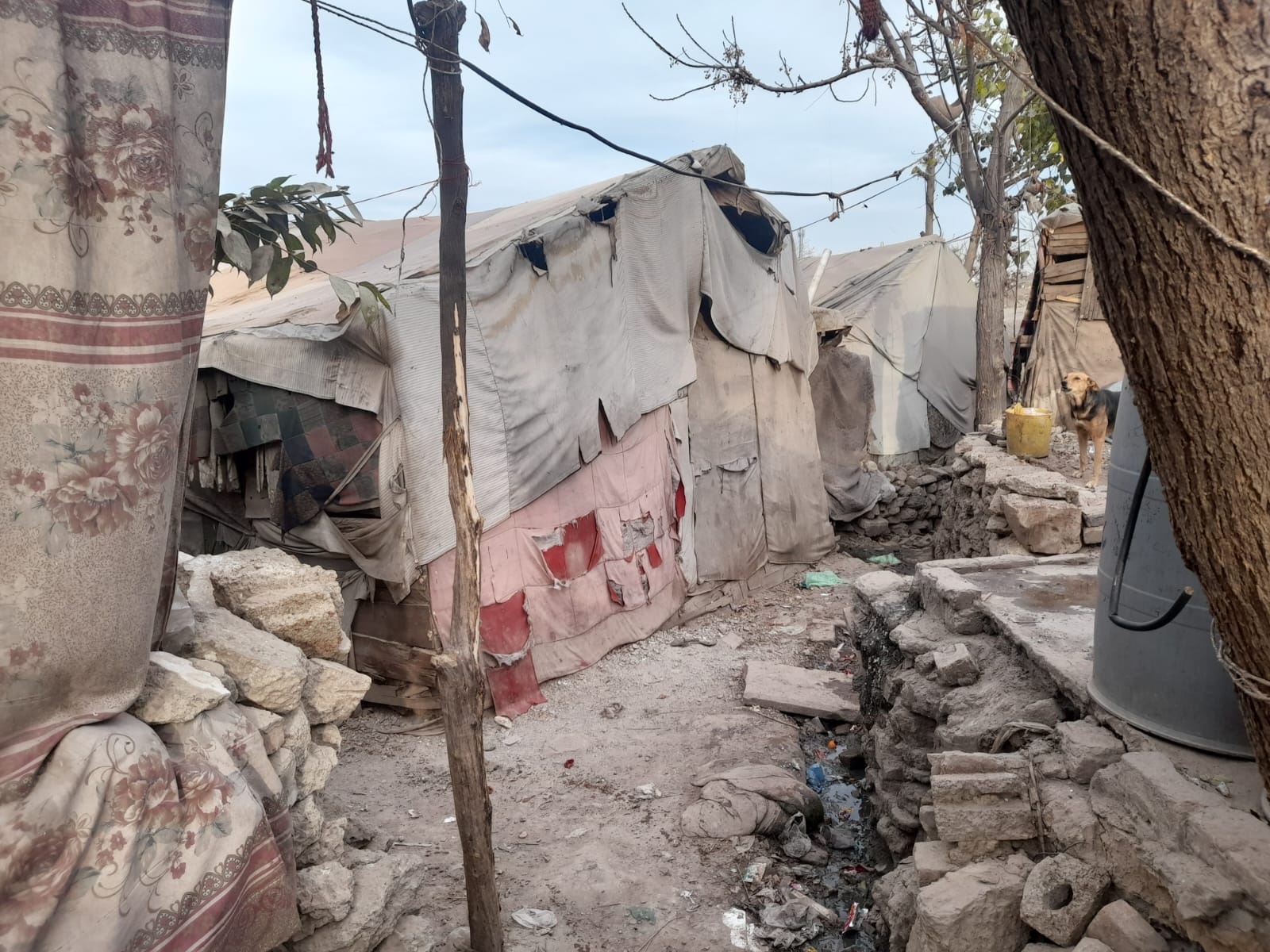
The people belonging to Bhatu clan, continue to live a marginalized life in Rawalpindi while residing in makeshift tents or ‘jhuggis’ without having access to basic necessities of life.
A significant number of people from the Bhatu tribe which is also known as ‘Changar’ have been living around the railway tracks in Rawalpindi even before the partition of India in 1947. Their distinct customs and deep-rooted traditions set them apart from other communities in many respects.
They speak a unique dialect known locally as Bhatu, which is noticeably different from the other languages spoken in Pakistan. The Bhatu people trace their origins to Rajasthan, India, and their language closely resembles with a Rajasthani dialect.
In this community, women play a leading role in earning a livelihood, a trait that distinguishes them from others. Regardless of the circumstances, they work tirelessly to make both ends meet.
According to some local accounts, during marriage negotiations, the bride agrees to certain conditions set by the groom as part of the dowry, which includes fulfilling the financial needs of the groom. The life pattern of them suggests that these are mostly the women who are the primary earners for their families.
They have two noticeable dwellings in downtown area of Rawalpindi, out of which one is situated at Marir Hassan and other one is situated near Municipal Slaughter House on Ratta Amral Road. Both these makeshift dwellings are situated alongside the railways tracks in totally unhygienic conditions.
The women of the clan do different odd jobs for living including begging, cleaning windscreens on roundabouts, selling toys and
others.
This has been observation of the scribe that most of the times before dusk, grown up girls of the clan show up at Marir Hassan at Murree Road and start engaging people whoever wants to communicate with them.
Generally an elderly woman of the clan oversee the entire group and she interferes accordingly whenever her intervention is needed by the younger lot.
The unity within the group keeps the moral of the girls boosted and they never hesitate to troll somebody if negotiations go the other way around. Those who know the norms keep chatting with them while maintaining the safe distance but if one gets closer, he may face the consequences on which he will rarely talk later on due to obvious reasons.
Most of the negotiations end up on the spot by exchanging low-mannered remarks and fewer negotiations may get pass to other level of interaction.
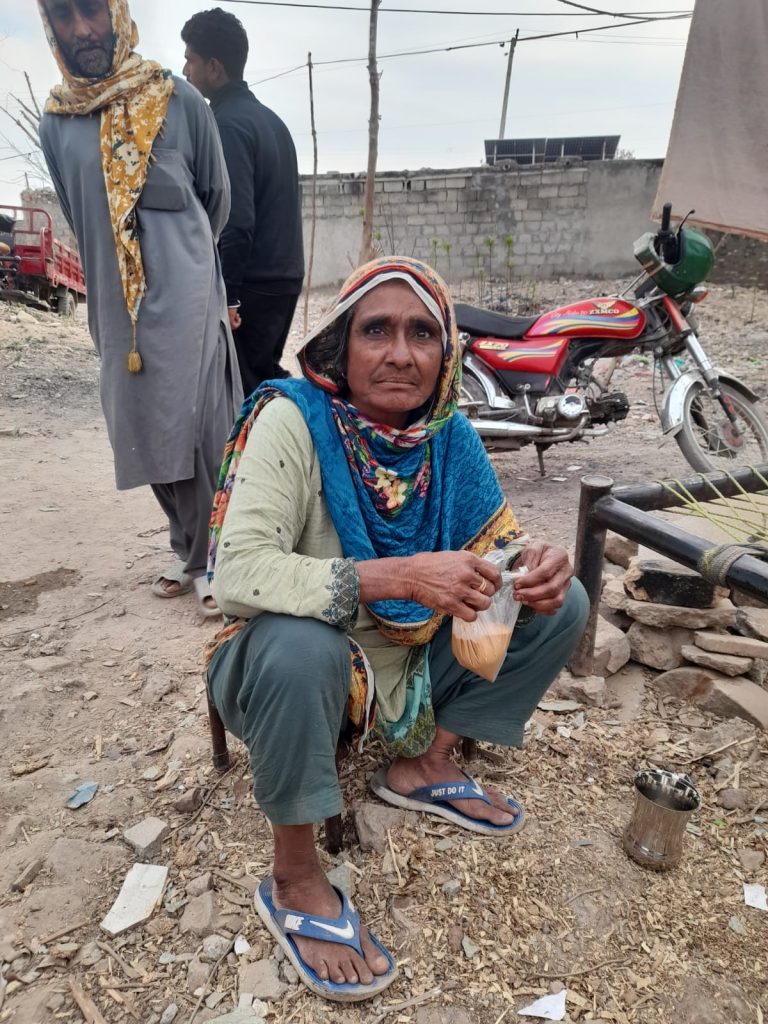
Zainab Bibi is a 65 years old member of the clan who has spent around 50 years in a ‘Jhuggi’ near the slaughter house after moving from Multan after her marriage.
This is pertinent to mention here that there are around 250 tents in this dwelling in which around 2,000 people are living their lives.
Zainab is the mother of five grown up daughters and three sons. Long ago her husband passed away and it was her who took care of children by doing different jobs. Now these are her daughters who are taking care of her.
She is very bitter when she talks about her individual and collective problems in which the foremost issue pertains to bread earning insecurities.
“My daughters sell clothes and toys in Saddar, Rawalpindi but the municipal committee or the police don’t allow them to earn living with dignity. They keep picking our girls whenever they catch them doing business and leave them in jungle,” she laments.
She argues if earning with dignity will become difficult then what they will do to make both ends meet.
“It seems they (local administration) want us to do decoities or robberies for our living,” she further comments.
According to Zainab mostly the women of her tribe sell toys, balloons and other things meant for children in some commercial areas of the city.
Interestingly, almost all the members of the clan do have CNICs and they are also registered voters. During election seasons the local politicians visit them as part of their election campaign and as usual make promises with them. Zainab says that a lot of promises are made during election campaigns with them but nothing is fulfilled.
The community is without proper place for toilet, electricity and supply of water. There is a one-room Madrassa in the dwellings where the children are taught religious education. This is the only facility which is built with bricks. Rest of the dwellings comprised of only tents, generally a tent is occupied by five to 10 persons.
Twenty-five years old Amjad was born in this locality and he runs motorcycle taxi (bykea) for his living. According to him one has to get water from a filter plant situated at Gawalmandi, which is situated around one and half kilometre away from this place.
“The management of the filter plant gets angry on us when we take water from the facility in bulk,” he narrates his tale.
According to him a fellow used to have school over here for teaching the children but now they don’t have school at the moment.
He says financial constraints are too impactful for his clan which force its female members to go out to earn living.
According to Amjad there is one-room Madrassa the locality and apart from this facility, there is no other noteworthy facility for thousands of persons living over here under extreme harsh conditions.
The dwellers rely on woods to cook food. Sometimes fire eruption cases are also reported from these dwellings which often leave behind only ashes. Fortunately there has been no life causality due to these incidents.
While elaborating the distinctions of his community Amjad says that Bhatu is their mother tongue which, according to him, is basically spoken in some areas of Indian Rajhastan. They can also speak Urdu fluently while interacting with the people outside of the clan.
According to him his clan rarely do marriages outside the community. While replying to a query about the lifelong financial assistance condition to bridegroom by the bride, he says: “Wedding gifts are acceptable norm in Pakistan and we also accept dowry on the occasion of marriages by the groom. However, things aren’t what you are mentioning,”
At the same time he refuses to shed more light on the matter. “Only those men permit their women to work outside who don’t have financial resources to take of the family themselves,” he argues.
On the other hand Haji Noor-ur-Rehman who is a resident of Arya Mohallah, Rawalpindi and who has many friends in Bhatus clan has a different story to tell.
According to him the clan has some unique customs on the wedding ceremonies in which taking care of financial needs of bridegroom by the bride is also included.
According to him, on the occasion of marriage, the bridegroom may stipulate his consent to the marriage with his financial demands which will require lifelong commitment by the bridegroom. “The bridegroom on the occasion of his marriage can play hide and seek with the relatives of bridegroom and will only turn up when his demand of financial assistance is assured,” he shares his observation with the scribe.
Sagheer Qamar is social worker who has done some research on the clan and according to him there are dozens of such dwellings throughout Rawalpindi and Islamabad.
“There are around 21,000 children of this clan who don’t go to schools and it is the phenomenon which is the worst part of the tragedy. He says the government or the NGOs should work on these children.
The government should make sure that children of the clan are enrolled in the schools as this is the only thing which can change their lives positively,” he observes.
According to him the women of the tribe take responsibility of earning because they got no other option in the environment where men either have no job opportunities or they are involved in unwanted activities.
Bhatus or Changars need attention of those who are at the helm of affairs to utilize their potential accordingly. They need education, skills and basic necessities of life to live life bit comfortably. The politicians who secure votes from these dwellings also need to talk about them on prominent forums to highlight the issues being faced by Bhatus. Ends